Latency you cannot hide
Traditional loading patterns assume hundreds of milliseconds. Streaming, partial rendering, and honest progress are the difference between 'thinking' and 'broken'.
By industry
AI products fail at the interface more often than at the model. Users need to know how confident the output is, where it came from, and how to correct it — and they need something to look at during the four seconds it takes to generate.
Streaming and latency-aware interfaces
Citation and correction patterns
Evaluation built into the product
Traditional loading patterns assume hundreds of milliseconds. Streaming, partial rendering, and honest progress are the difference between 'thinking' and 'broken'.
Output presented with equal authority whether it is certain or guessing teaches users to distrust all of it. Citations and visible sources make the good answers more valuable.
Users will need to fix output. If the only option is regenerate and hope, they leave. Editing and steering in place is what makes a product usable daily.
Track how often users accept output without editing it. It is a far better health signal than usage, and it tells you whether the model or the interface is the problem — which are very different fixes.
Most AI startup sites say the same three things about intelligence, automation, and the future. The ones that convert show the product doing something specific for someone specific, with real output rather than an abstract diagram.
We design for that, and build the site to rank for the problem you solve rather than for the word 'AI' — a term you will not win and whose traffic would not convert anyway.
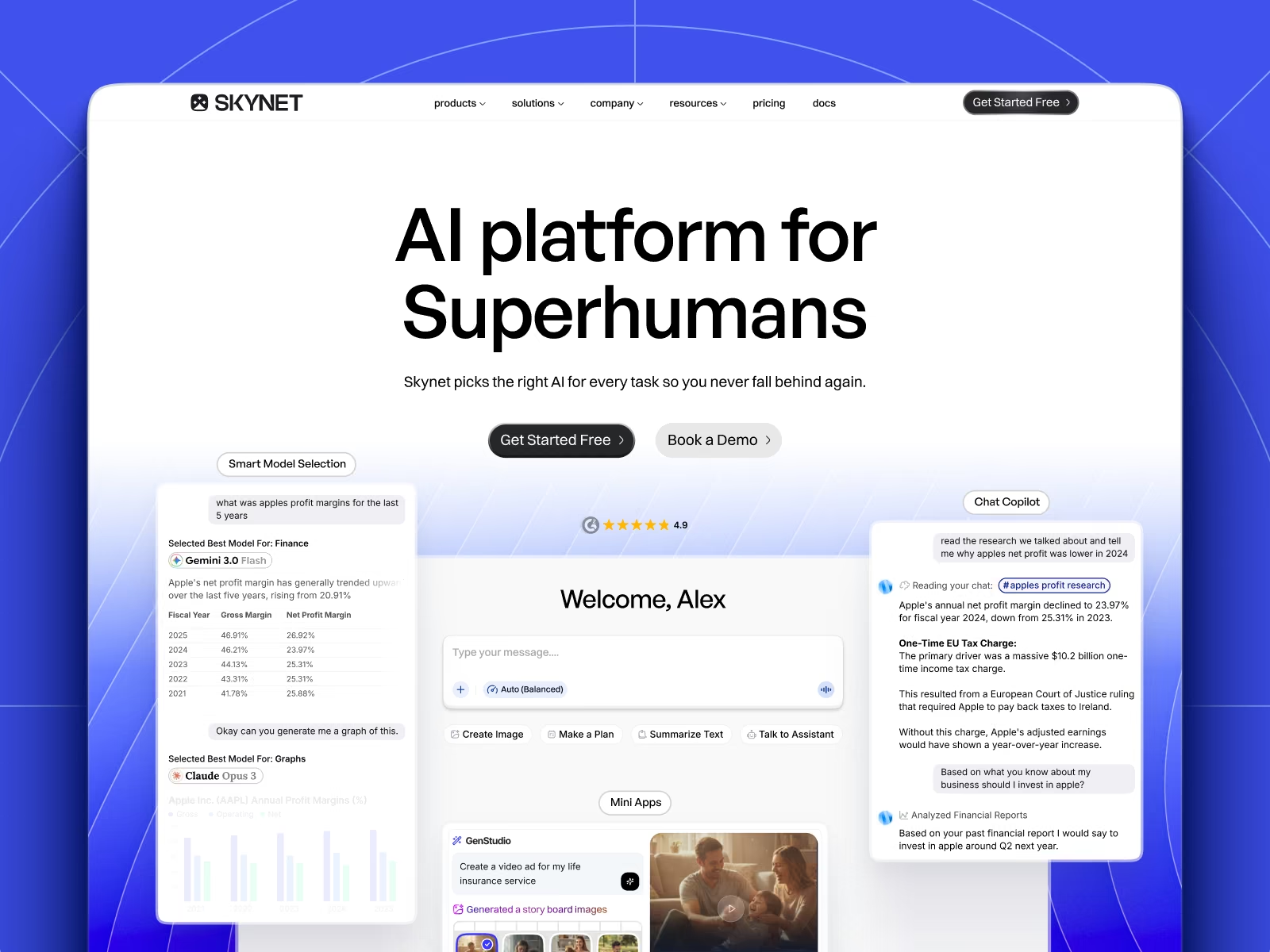
Skynet
Brand identity, marketing site, and product design for Skynet, an AI platform that routes every task to the right model across 20+ providers.
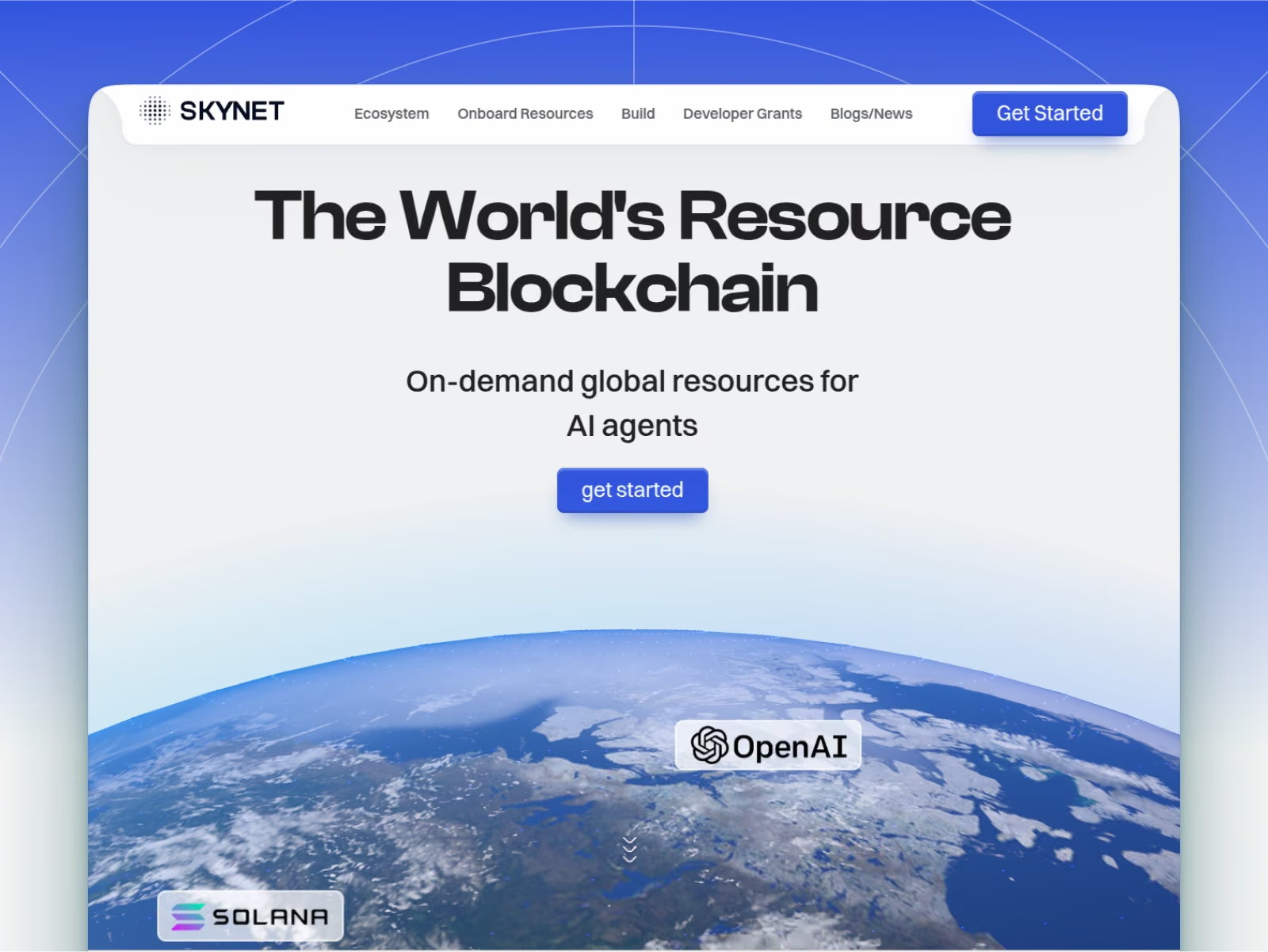
Skynet
Brand and site for Skynet's agentic network: a protocol layer connecting AI agents to compute, storage, and services across Web2 and Web3.
Yes — retrieval, agents, evaluation, and cost control alongside the interface. See custom product development for how we approach it.
No, but be ready to change direction. Pre-launch work should be cheap to throw away and we will build it that way rather than over-engineering it.
That is mostly a brand and positioning problem, and yes — it is some of the most valuable work we do for this category.
One flat monthly fee. Unlimited requests. Design and engineering under one roof — pause or cancel whenever you like.