Led with the tasks, not the topology
The page opens on what agents actually do on the network — plan an itinerary, deploy an application, launch a trading bot — and only then explains the layer that makes it possible. Concrete before abstract.
Web3 · Brand & site
A protocol layer where AI agents reach compute, storage, and third-party services on demand. We gave an abstract piece of infrastructure a surface people could evaluate.
Visit the live site
2 audiences
Developers and agent operators, one site
3
Ecosystem surfaces launched
Protocol projects have a specific failure mode: the site explains the architecture and never says what anyone would do with it. Skynet's network sits underneath agents rather than in front of users, so there was no screenshot that made the value obvious and no single user to write for.
It had to speak to two audiences at once. Developers wanted to know what they could plug into and how. Everyone else wanted to know why an agentic network mattered at all.
The page opens on what agents actually do on the network — plan an itinerary, deploy an application, launch a trading bot — and only then explains the layer that makes it possible. Concrete before abstract.
Ecosystem, tools, build, and grants each got their own entry point, so a developer arriving from documentation lands somewhere useful rather than on a manifesto.
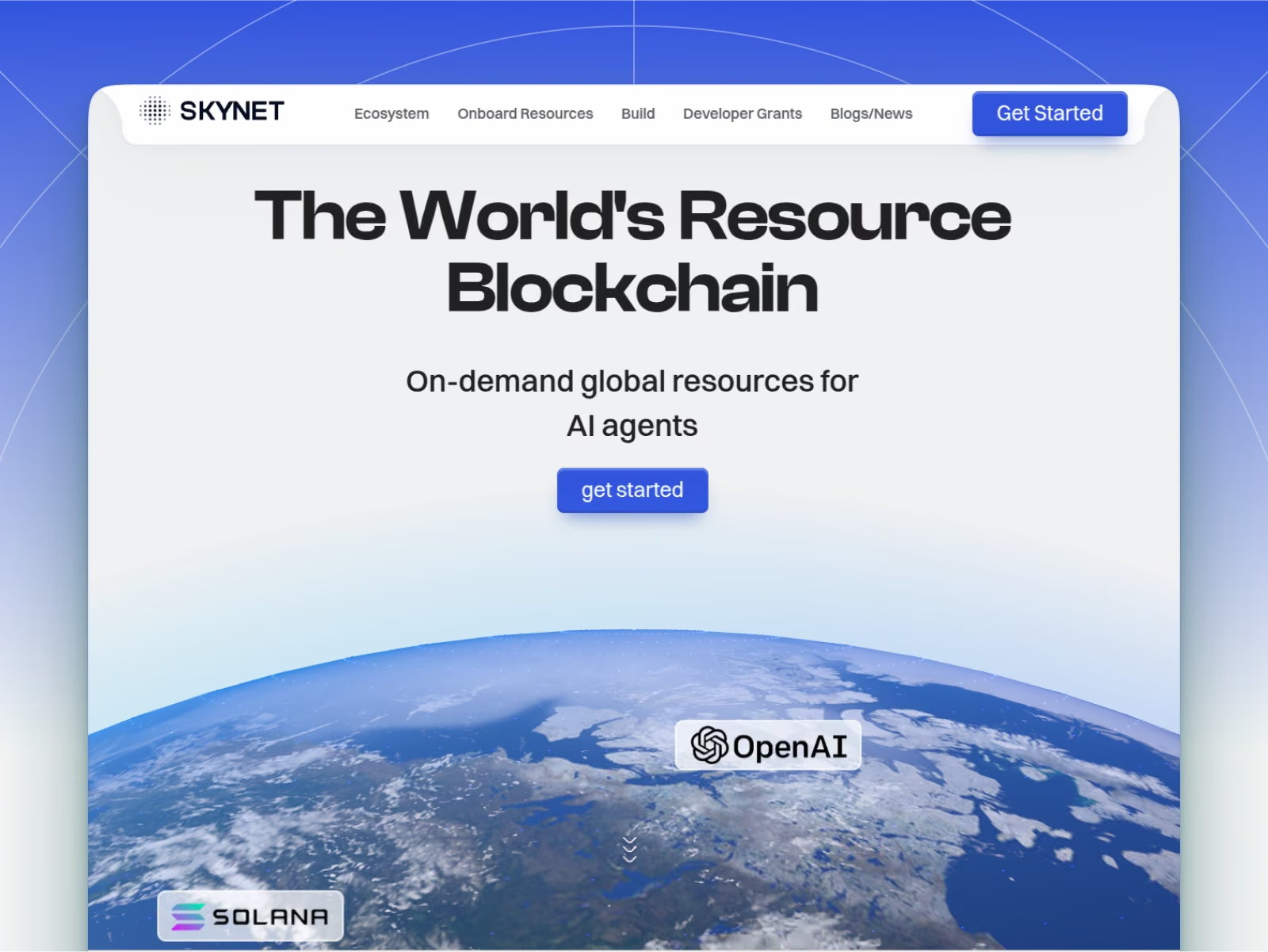
The integration set — OpenAI, NVIDIA, Solana, IPFS, AWS, Google Cloud — does more for trust than any claim we could write, so it sits high on the page rather than buried in a footer strip.
A site that a developer and an investor can both read without either feeling talked past, and a brand system that carried through to the studio product and the documentation.
This engagement is also where the Skynet relationship started. The workspace product we designed later reuses the type and colour foundations set here.
Built with
SvelteKit
TypeScript
GSAP
Figma
Tell us what you're building. We'll show you exactly how we'd approach it — no pitch deck, no retainer negotiation.